Villages in Paphos, Cyprus
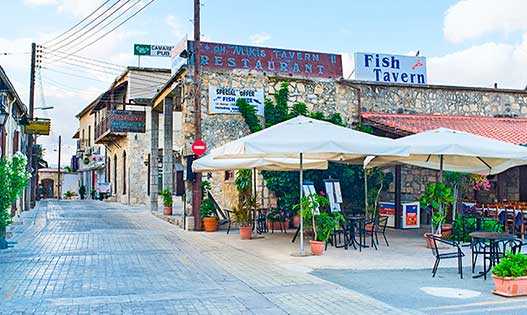
Polis is the smallest municipality in Cyprus. It is located 37 km north of Paphos on the shores of Chrysohu Bay between the Akamas and Tilliria peninsulas on the site of the destroyed ancient Cypriot cities of Marion and Arsinoe. Translated from Greek, its full name translates as "golden city." The center of Polis is turned into a pedestrian zone. The city has preserved many buildings with traditional architecture, ancient churches and chapels. The Archaeological Museum of Marion-Arsinoe has a collection of objects of antiquity found as a result of excavations carried out here. The policy is able to satisfy the most discerning tourists. In its vicinity there are luxury hotels, comfortable apartments, villas with private pools, and tourist villages. In addition, a spacious campsite with a sandy beach is located within walking distance from the city center in the eucalyptus forest. The policy of Chrysochus serves as a port for fishermen from the nearby village of Lathi, and is known for its fish fairs and yachting competitions.
Episkopi
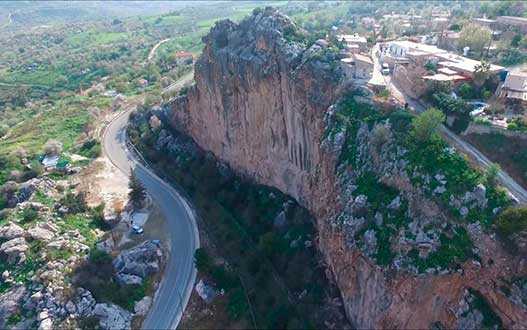
The village is surrounded by cliffs dotted with vineyards, on the west bank of the Ezusa River. On the territory of Episkopi there is an old drinking fountain and a rock of the same name 70 meters high. On the opposite bank of the river are the ruins of a small monastery of the Holy Cross (Timiu Stavru). Beyond the hill beyond the village, Saint Agios Hilarionas the Great (AD 291-371) spent his life. You can visit the cell of the saint and put a candle in the church that was built in his honor. Four nature trails are organized on the territory of the settlement.
Argaka
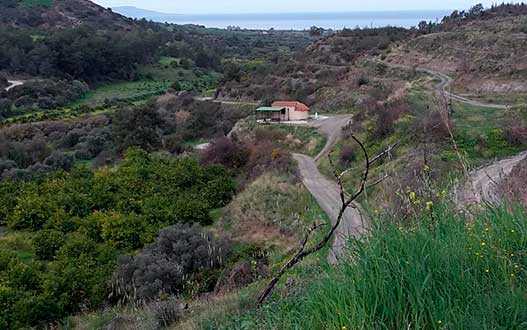
It is a village in the Paphos region of Cyprus, located 7 km northeast of Polis, at an altitude of 96 meters above sea level. From a geological point of view, it is located on limestone sandstones, sands and marls of the Pleistocene period, as well as on lavas and igneous rocks. From a morphological point of view, a coastal alluvial plain, one or two sea terraces and a slope that rises steadily to 500 meters stand out. Several streams flow down the slope towards the sea, indeed with a relatively large one flowing near the village. To the southeast of the village is the Makunta River, on which the Argaka-Makunta Dam was built.
Tsada
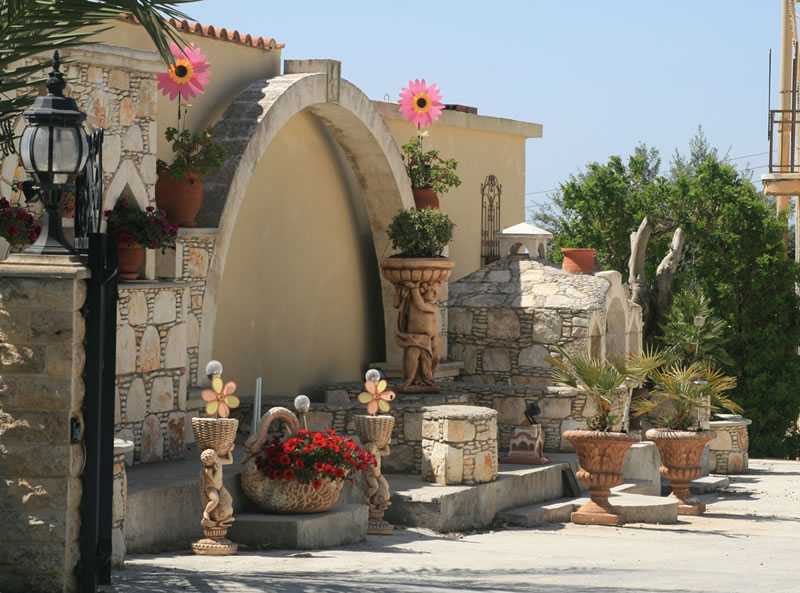
One of the largest villages near Paphos. which is 500 meters above sea level. It offers spectacular views of all of Paphos up to Peya. Tsada is known as a golfing destination as it is home to Minthis Hill Golf Club with beautiful green courses. The upmarket area of Minthis Hill offers an array of luxury villas with contemporary designs. The village has a square, a monastery, a church and chapels. You won't be disappointed to visit the local traditional tavern, The Fountain of Gerolakkos.
Kamares
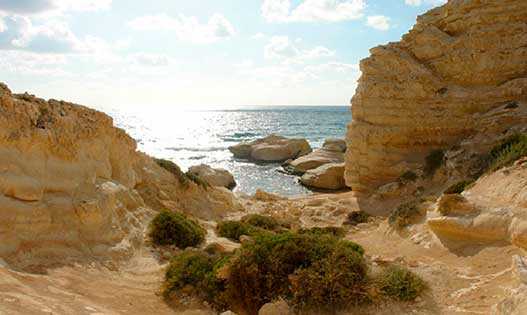
The village is located in the hills at an altitude of 457 meters above sea level, just 20 minutes from Paphos, overlooking the Mediterranean Sea. Here is the exclusive residential complex LEPTOS Kamares Village - an elite complex of luxurious villas with graceful stone arches, bungalows, tennis courts. The views of the coast and countryside are breathtaking. Near the village is located the monastery of St. Neophyte of the 12th century. The air here is less humid, even in the hot summer months you can enjoy the cool summer breeze.
Lempa
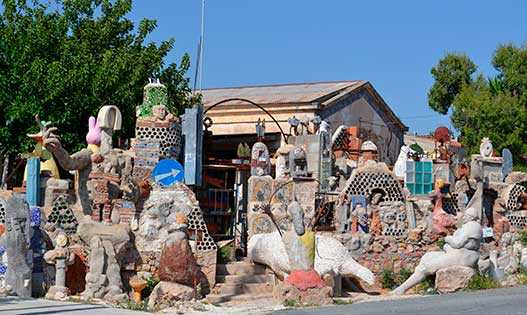
Prehistoric village of the Eneolithic era - approximately 3900-2500 BC. Round houses and their copies have been preserved here. The houses were reconstructed using the methods and materials of the era. In ancient times, the villagers were engaged in hunting, fishing and agriculture, this is evidenced by household items that were found during excavations were found - tools made of bone, horn and stone, leather and ceramic products, animal bones and seeds. The village is located on top of the escarpment overlooking the Mediterranean Sea. The lands are fertile, with local people growing olives, citrus fruits, tomatoes and other vegetables.
Giolou
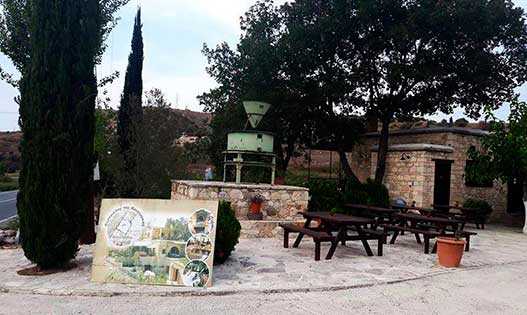
At an altitude of 300 meters above sea level, this traditional Cypriot village is located. According to one version, the name comes from the word "yiol," which means "road." According to another, the name came from the name of the feudal owner who owned the village during the Byzantine era. Local residents like to spend time in coffee houses over a cup of strong coffee and playing backgammon. Also the village is known as "Fox Village" because its inhabitants were hunting.
Polemi
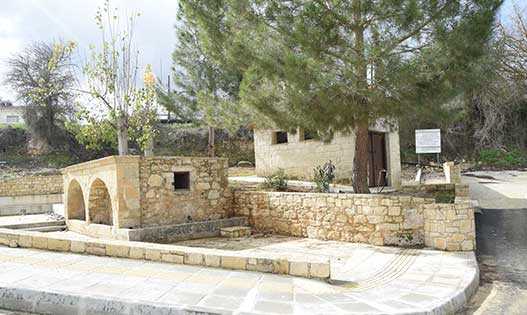
A small village located on the picturesque Paphos Hills, 4 km north of Letimvu and 3 km east of Strumbi along the main Paphos-Polis road at an elevation of 463 m above sea level. Traditional white limestone lodges stand on a plateau overlooking the orchards and valley. Polemi successfully combines rustic flavor and well-developed infrastructure. The main church of the settlement was built in the XII century. and bears the name of Panagia Chryseleus (Virgin of Mercy). Polemi is surrounded by fourteen chapels, but only three of them have survived to this day - the prophet Elijah, St. Marina and St. George. Polemi is among the villages of the Laona-Acamas wine route. The local Thsalapatis winery has existed since 1989. Wild tulips grow in the vicinity of the village with an abundant carpet. A local club of lovers of these flowers annually organizes a tulip festival in Polemi with the aim of preserving and protecting them.
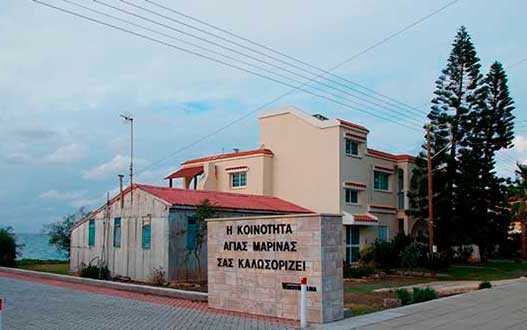
Ayia-Marina Chrysochous
The village is a wooded area and coastal plain. Mouflons, hares, partridges and other animals live in the forest zone. The main crops of the village are citrus fruits, some vegetables, bananas and fruit trees. Vegetables, cereals, citrus fruits, fruits are grown here. The village beach covers an area of 2.5 km. The cliffs along the Ayia Marina Chrysochous sea coast are perfect for relaxation and inspiration, especially if you're looking for a place to read a book or draw a sea - it's a lovely spot.
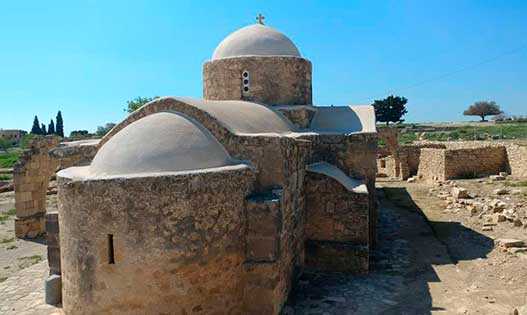
Kouklia
A village on the Mediterranean coast, in the mythical birthplace of Aphrodite. The rock of Petra tu Romiu, better known as the rock of Aphrodite, where according to legend the goddess of love and beauty was born, is located near the village. Since 2006, the ancient city and sanctuary have been excavated here. Some finds are kept in the local museum. In ancient times, the kingdom of Palaipafos was located on this site. Here, next to modern houses, there are temples and places of worship built thousands of years ago. The main attractions are the Bronze Age Holy Temple of Aphrodite (circa 3000 BC) and a castle-like medieval mansion from the 13th century.
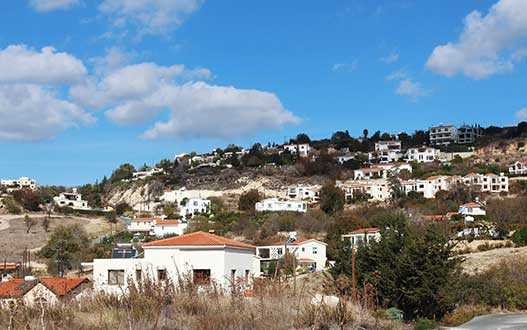
Armou
Due to its attractive geographical location, natural beauty and serenity, the village attracts many Cypriots and foreign residents. Tsada - Minthis Hills Golf Course is a ten-minute drive from Armu. St. Barbara's Church, the main temple of the village of Armu, was built in 1908. In 1953, she suffered from an earthquake and was updated. A tavern and coffee shop can be found in the village.
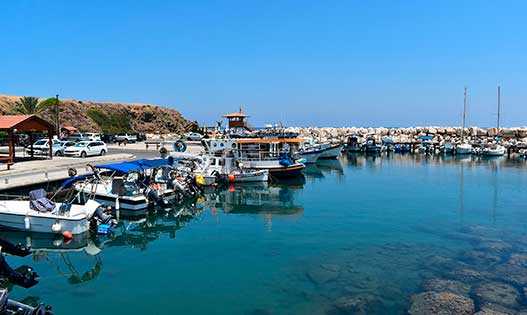
Pomos
The charming fishing village, 60km north-east of Paphos, has nestled in Chrysohu Bay on the Tilliria peninsula. The most famous attraction is the Pomos idol - a sculpture in the form of a human figure with widely spread arms, which was first discovered in these parts and subsequently became one of the symbols of Cyprus. The age of the find dates back to the Eneolithic era (XXX century BC). The Museum of Natural History operates in the building of the cultural center, which presents characteristic samples of minerals, rocks and local fauna, as well as fossils and fossils. The main church is the Church of St. Evpsichios built at the beginning of the twentieth century. In addition to the beach holiday in Pomos, you can go scuba diving, take a boat trip, treat yourself to the gifts of the sea in numerous fish taverns on the coast, or fish yourself.
Panagia
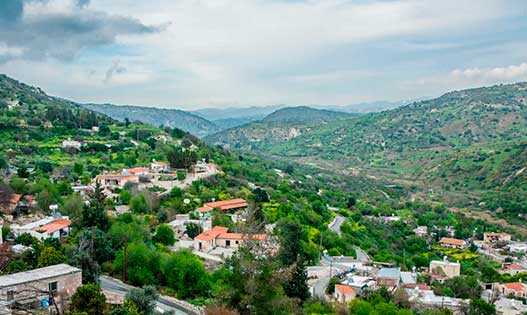
The small village nestled in the wooded Troodos foothills at 900m above sea level just half an hour's drive from Paphos International Airport. "Panaya" means Virgin Mary. In the village itself and its environs there are many churches and monasteries - the Church of Panagia Eleusa, the Church of the Archangel Michael, the Monastery of Panagia Chrysoroyatissa, the Church of St. George, the forest chapel of St. George ton Emnon, etc. Archbishop Makarios III, the leader of the struggle for the independence of Cyprus and the first president of the Republic of Cyprus, was a native of Pano Panaya. His home has been turned into a museum. Pano Panaya is famous as one of the best wine areas on the island and is included in the Vuni Panayas - Ambelitis wine route. The unique location of vineyards in a mountainous area surrounded by coniferous forests allows you to create a truly unique bouquet of tastes.
Stroumpi
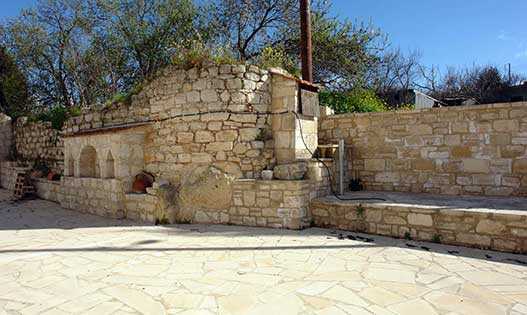
A small village in the Paphos district, located between Polis and Paphos. It hosts the annual wine festival "Dionysia," which is named after the god of ancient Greek wine god Dionysus. Strumpy was widely known for its quality wines. There were five wineries in the village, now they are all closed. The village is said to be named after its founder, Strompulos. According to another version, the name came from the word "strumpulos," which means "rounded," this is how the hills surrounding the village look like. Strumpy consists of two parts - Pano Strowmby and Kato Strowmby. Pano Strowmby is an ancient settlement, presumably from the Middle Ages. Kato Strowmby is a new part of the village, built after the 1953 earthquake.
Neo Chorio
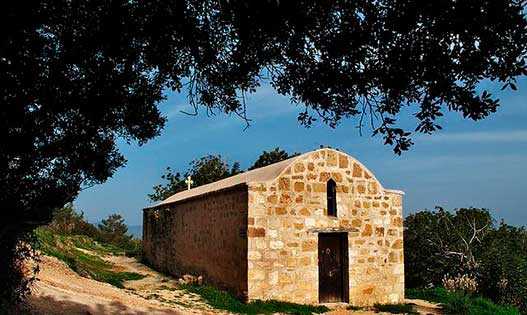
The village in the traditional Cypriot style, located on the hills of the Akamas peninsula, rises above the Gulf of Chrysochus. Known as the "Gate to Akamas." Translated, the name of the village means "New Village." Located 5 minutes from Lacha, 10 minutes from Polis. The architecture of traditional stone houses and ancient churches has been preserved here. The main Church of St. Minas was built in 1912, next to it is the chapel of St. George of the late 17th century. Also in the center of the village there is a fountain built in 1926. At the entrance to the village is the chapel of St. Ephraim, from here you can enjoy panoramic views of the surroundings.
Koili
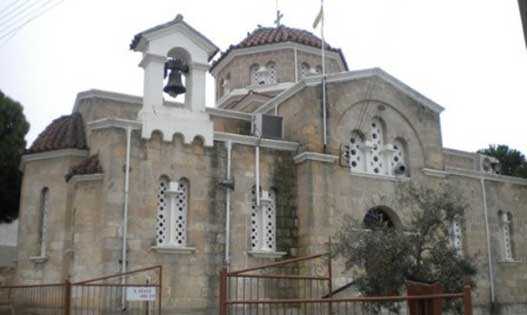
Most of the settlement houses are built of natural material - stone, which was mined in a quarry in the village area. It is engaged in the cultivation of grapes, citrus fruits, vegetables and crops, almond and carob trees grow. The main church of Agios Mamas was destroyed by an earthquake in 1955, it is currently covered with trimyphia wood. The main square from the end of the 15th - beginning of the 16th century was decorated with a church, which was later replaced with a newer one - the Church of Panagia Chryseleusis, a local quarry stone was used for construction. The village is located at an altitude of 580 meters, divided by the Mavrokolympos River.
Kathikas
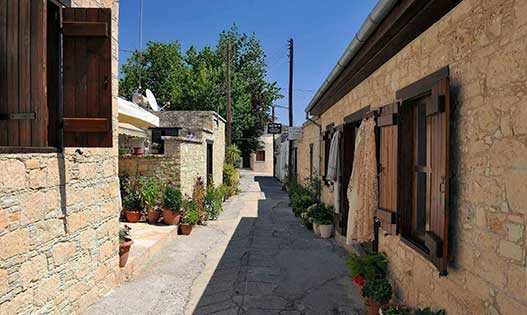
A traditional Cypriot village where houses are found that are over a hundred years old. Ancient churches are located here, which are wonderful examples of folklore architecture. Here, on Good Friday, the "Passion of Christ" is traditionally shown, according to tradition, the role of Jesus is performed by the Chairman of the Community Council, he carries a cross, accompanied by a procession from the chapel of St. Onufry to the Church of the Virgin Evangelistria. The main church of Panagia Evangelistria is located in the center, built in 1870. One of the wine villages of the Paphos district. The production of wine in Kathikas has been for many years, now wineries use modern production methods. The village is widely known for its Easter traditions. The main attraction is the Sterna Winery - on its territory there is not only a winery, but also a wine museum with an old cellar and a view of the vineyards, whose area is more than 50 hectares.
Dhrousha
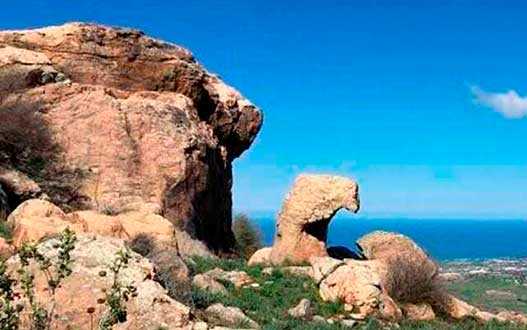
It is one of the smallest villages in Paphosa County. It is located at the highest point of the Laona Plateau, at an altitude of 640 m above sea level. The name of the village in Greek means coolness and temperature. It is really cool even in the summer sweltering months. The village is in close proximity to the Akamas Nature Reserve. The coast of the village is rocky with small sandy and sandy-pebble bays. The nearest beach is Lara, located on the territory of the reserve. The village has many walking and cycling routes with magnificent views and seascapes. Good golf courses can be found in Drusia County.
Ineia
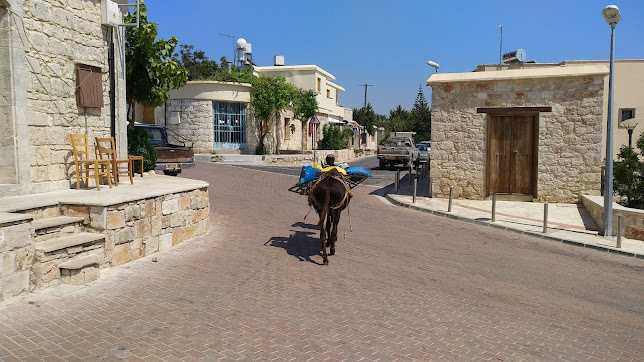
Located in a mountainous area among vineyards, a picturesque village is part of the Laona-Akamas wine route. It offers a bewitching view of the Akamas Peninsula. Known for its craft of basket weaving, here it is preserved in its original form. The name of the village came from the Greek word "inos," which means "wine." The site is popular with photographers and artists attracted by the breathtaking beauty of the sites.
Anarita
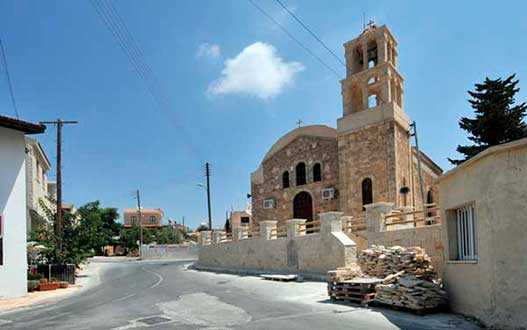
Small village just 15 minutes drive from Paphos. It has everything you need for a comfortable life - supermarkets, fruit markets, bakeries and small shops. There is also a primary school and a kindergarten in the village. On the village square there is a local coffee shop in which local residents gather for a cup of thick strong coffee to play cards or backgammon. The history of the village begins in the Middle Ages. In 1468, Anarita was presented to the knight Jerome Salviati by King James II. Thanks to the hard work of local residents and fertile soils, the village became an important agricultural, livestock and dairy village.
Sort by: