Paphos is a resort city on the southwest coast of Cyprus and the centre of the namesake district, one of the six districts of the island. According to Greek mythology, the goddess of love and beauty Aphrodite was born near the shores of Paphos, which is why Cyprus is often called the “Island of Aphrodite”.
The city was founded in the 4th century BC. The archaeological sites of Paphos are listed as a UNESCO World Heritage Site.
History and Myths of Paphos
Paphos is one of the oldest cities in Cyprus and a key centre of the cult of the goddess Aphrodite. According to mythology, she rose from the sea foam near the shores of Paphos. The first settlement (Palaepaphos) was located on the site of today’s village of Kouklia.
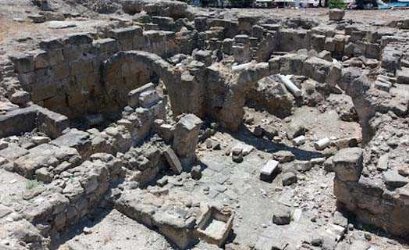
During the Hellenistic and Roman periods, Paphos was the capital of Cyprus, and today its archaeological monuments are listed as a UNESCO World Heritage Site.
Read more about the history of Paphos →
City Structure
Paphos is conventionally divided into two parts:
Pano Paphos – the upper town, the administrative centre with municipal institutions, offices and residential neighbourhoods.
Kato Paphos – the coastal area with low-rise buildings, hotels, restaurants, bars, the promenade, the archaeological park and the main historical and cultural attractions.
Population
Paphos has a population of about 36,000 people.
Around 80% are Greek Cypriots who speak Greek. The remaining population consists of mixed communities: the British expat community, Russian-speaking residents, as well as people from Turkey, Georgia, Syria, Armenia and other countries.
English is widely spoken due to the large expat population and tourism; many residents also understand Russian.
Climate
Paphos has a Mediterranean subtropical climate: hot dry summers and mild wet winters. Most rainfall occurs from December to March; snow is extremely rare, although heavy winter showers may bring hail.
- Summer: up to 35–38 °C, sea temperature around 27 °C.
- Winter: usually 13–15 °C during the day (the sea temperature is roughly the same).
- Spring and Autumn: comfortable 18–28 °C.
There is virtually no rainfall during summer.
Key Attractions
- Tombs of the Kings – approximately 3 km from the centre.
- Kato Paphos Archaeological Park – around 2 km.
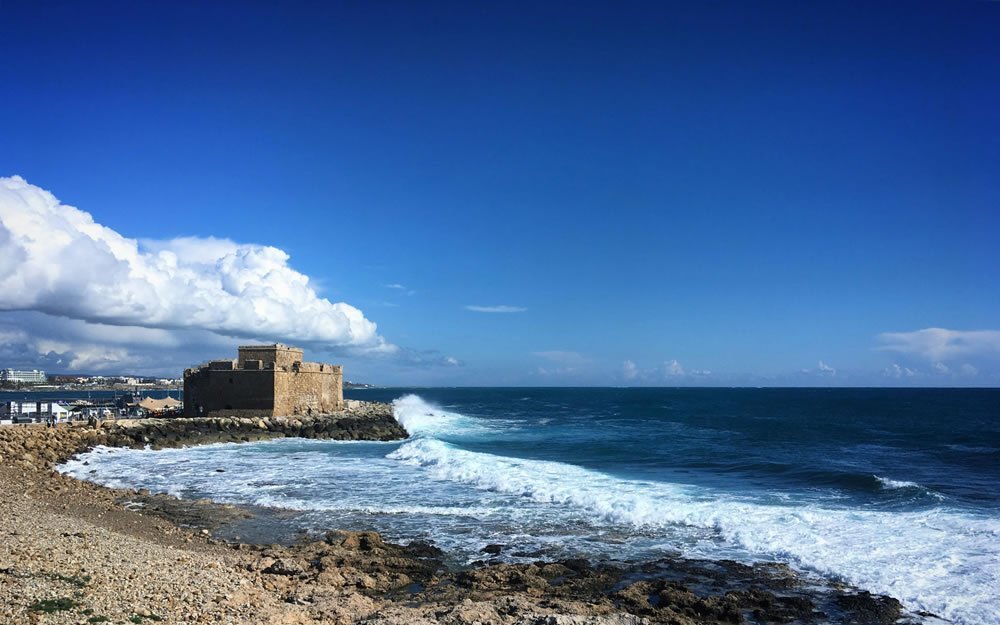
- Paphos Castle at the harbour.
- Petra tou Romiou (Aphrodite’s Rock) – about 25 km.
- Agios Georgios (Pegeia) – approximately 12 km.