Agios Nikolaos
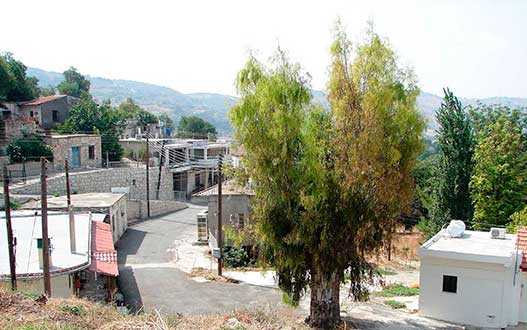
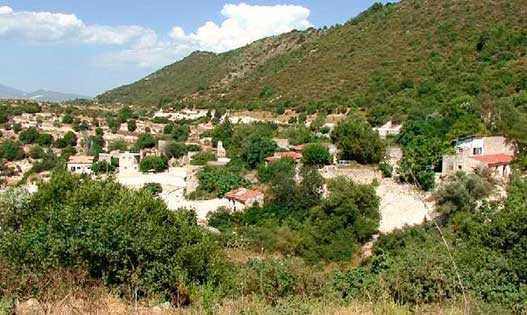
Agios Nikolaos in the Paphos district is a small mountain village surrounded by dense forest vegetation, vineyards, and fruit orchards. The landscape varies between approximately 400 and 700 meters above sea level, offering a cooler and greener climate compared to the coastal areas. The village is ideal for peaceful walks, exploring traditional architecture, and enjoying nature.
Nature and Landscape
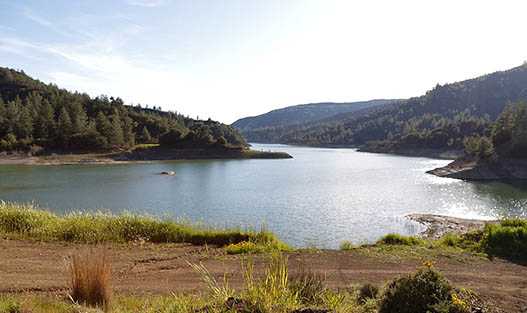
The surroundings of Agios Nikolaos feature a mixed mountain and forest landscape. Cypress, pine, plane trees, and Mediterranean shrubs dominate the area, typical of the Paphos Forest region. On the slopes, old vineyards have been preserved, where traditional black grape varieties were cultivated for decades. Fruit trees such as apple, pear, peach, almond, and walnut can also be found throughout the village. The Diarizos River flows through the valley, creating a fresh and shaded environment even in summer.
During spring, the village is especially picturesque. Fruit trees bloom, greenery becomes vibrant, and temperatures in the mountains stay noticeably lower than on the coast.
Architecture and Atmosphere
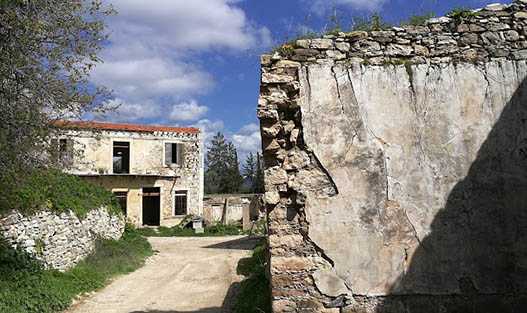
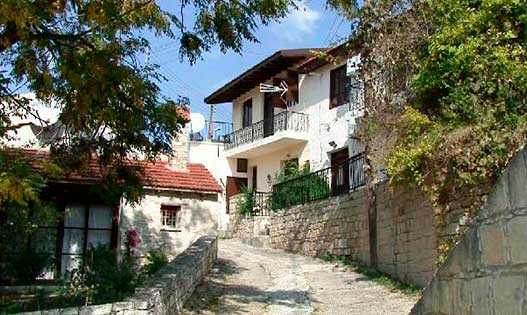
Agios Nikolaos has preserved its authentic Cypriot village character. The settlement features traditional stone houses with wooden doors, well-maintained inner courtyards, old fountains, and narrow streets. In the center lies a small but distinctive village square, which remains the main meeting point for residents.
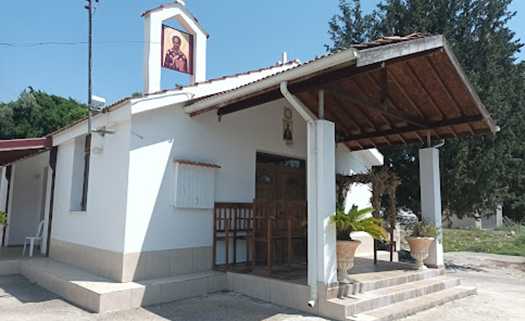
The main church is dedicated to Saint Nicholas. This small Byzantine-style stone building was constructed from local stone during the early Ottoman period. Its simple architecture fits naturally into the surrounding landscape of cypress and pine trees.
History and Regional Significance
The area around Agios Nikolaos was historically located on one of the important mountain routes that connected the western part of Cyprus with the inland. During the Venetian period, these paths were used for transporting copper, timber, and agricultural goods. Because of this, several medieval stone bridges have been preserved in the region.
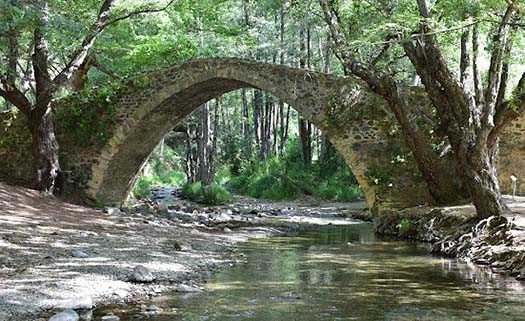
The most famous of them is the Tzelefos Bridge, situated a short distance from the village. It is the largest surviving Venetian bridge on the island.
Tzelefos Bridge
Tzelefos Bridge is one of the most significant historical and natural landmarks of Cyprus. Built during the Venetian rule, it is a high stone arch bridge with a span of about 30 meters, crossing the Diarizos River. The surrounding forest creates an unusually lush and cool environment for Cyprus.
Today, the bridge is a popular spot for hikers, photographers, and visitors seeking peaceful nature. The landscape is especially beautiful in spring and autumn.
What to See and Do
- Walk through the village and explore its traditional stone architecture.
- Visit the church of Saint Nicholas.
- Follow the nature paths along the Diarizos River.
- Drive or walk to Tzelefos Bridge.
- Enjoy a picnic under the shade of plane trees.
- Explore old vineyard terraces and fruit orchards.
Useful Information
- Best time to visit: spring, early summer, and autumn.
- There are very few cafés or shops in the village; there is no infrastructure near the bridge.
- Comfortable shoes are recommended.
- The area is suitable for families, nature lovers, and photography.
Attractions
St. Nicholas Church
A small stone church in Byzantine style. It was built at the beginning of the Turkish occupation using local stone.