Agios Ioannis
Agios Ioannis Salamiou (Άγιος Ιωάννης Σαλαμιού), also known as Ayios Ioannis, is a village located in the southwestern foothills of the Troodos mountain range. It lies 42 km northeast of Paphos and 4 km from the village of Salamiou, at an altitude of 670 metres above sea level, between two major rivers - the Diarizos and the Xeropotamos.
The name of the village is associated with Saint Ioannis Kalliergous (Άγιος Ιωάννης Καλλιέργους), who was born and lived in this area around 1100–1150 AD. After the Turkish occupation, most of the village’s residents were Turkish Cypriots, who, from 1952 onwards, used the name “Aydin”, which literally means “enlightened”.
The population of the village increased significantly in 1953, when, after an earthquake in the nearby village of Malounda, all its residents were relocated to Agios Ioannis. Later, Malounda was incorporated into Agios Ioannis. Until 1958, only two or three Greek Cypriot families lived in the community.
The village was one of the strongholds of the Turkish Resistance Organization and served as a reception centre for relocated Turkish Cypriots from nearby villages such as Geroskipou and Galataria. Most of them remained in Agios Ioannis until 1975. In 1971, the total population of the village was 1,150 people.
On 14 August 1974, after the militants in Agios Ioannis refused to surrender their weapons, the village was attacked by Greek Cypriot armed forces. After three days of fighting, the Greek Cypriots entered the village. Most of the Turkish Cypriots secretly fled through the mountains to Northern Cyprus or to the British base in Akrotiri.
By the time of the Vienna Agreement, nearly 700 people from Agios Ioannis had been relocated to the northern part of the island. On 18 August 1975, UNFICYP (United Nations Peacekeeping Force in Cyprus) escorted the remaining 200 residents. Most Turkish Cypriots from Agios Ioannis were resettled in the village of Zodeia / Bostancı, while others were given homes in different villages such as Karavas / Alsancak, Gerolakkos / Alayköy, and in the cities of Nicosia, Kyrenia, Famagusta, and Morphou.
Greek Cypriots from the northern part of the island later settled in Agios Ioannis. However, over time, most of the Greek Cypriot refugees either moved to other areas or stayed there only on weekends. According to the 2011 census, the population of Agios Ioannis Salamiou was 29 residents.
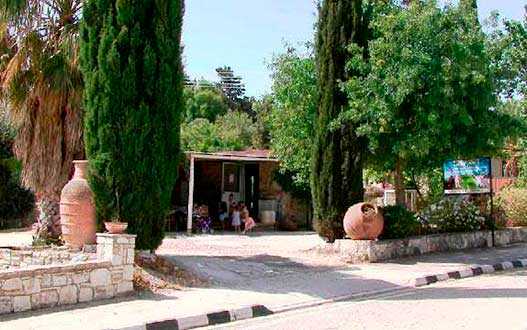
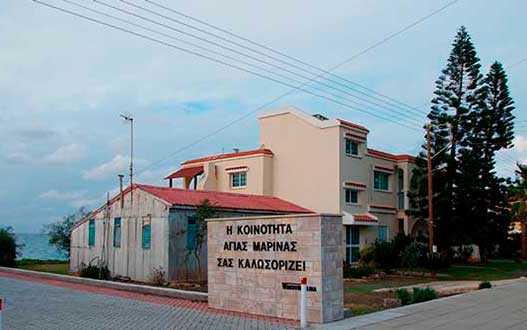
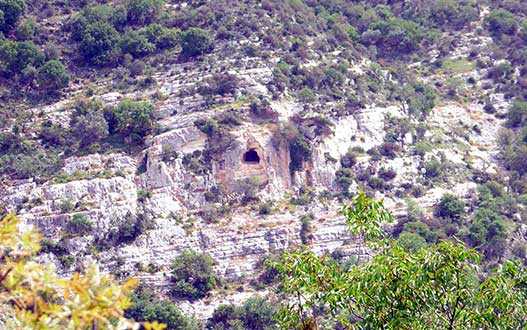
Attractions
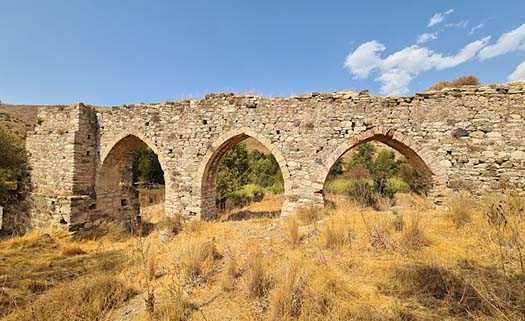
Aqueduct
An old stone aqueduct set among the village hills. A nearby natural spring and quiet scenery make it a peaceful stop.
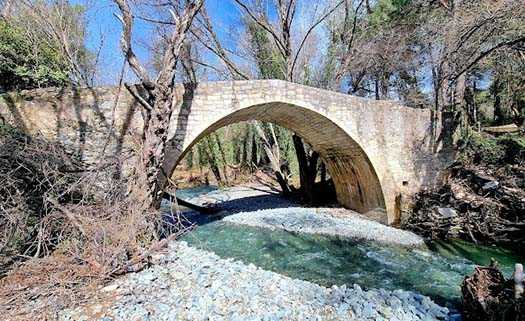
Roudias Bridge
A historic Venetian bridge over the river, shaded by trees. A calm and scenic place for a short walk and rest.
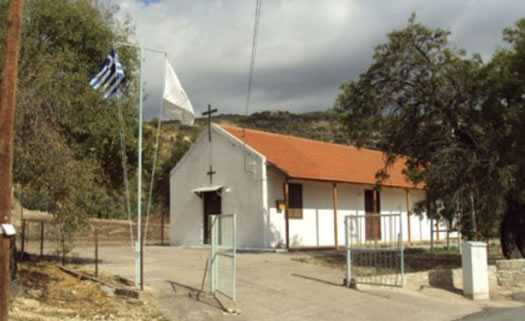
Church Saint Ioanni
A small rural church in the heart of the village. A quiet spot with traditional charm.